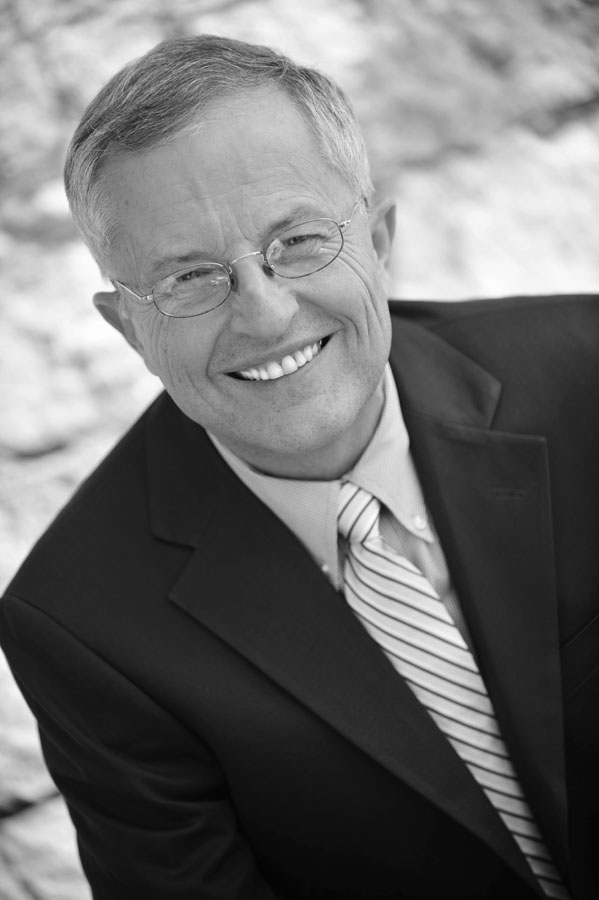
Showing posts with label Louis Moore. Show all posts

Tuesday, November 18, 2008

Keeping Secrets in the Church, part 2


(When Terry Mattingly interviewed me for his excellent column on my new book, Witness to the Truth, he said he was writing two columns about secrecy in the church. For column #1 he used my book to zero in on secrecy in the Southern Baptist Convention. For column #2 he used Russ Shaw's new book to hone in on secrecy in the Roman Catholic Church.  He found the fact to be interesting that both books came out simultaneously and focused so clearly on the lack of truth telling among church leaders and institutions today.

I believe that its failure to walk in the light of truth and honesty severely hinders the church and denominations today. Obviously Russ Shaw and Terry Mattingly believe along parallel lines. Spin-doctoring and and media manipulation in their own midst are serious problems that church leaders refuse to address.

(Read below how Terry has condensed quite nicely Russ's book.)

WASHINGTON BUREAU: Terry Mattingly's religion column for 11/12/08.

If you want to cause trouble for American bishops, stick them in a vise
between Rome and the armies of dissenters employed on Catholic campuses.

But the bishops had to vote on Ex Corde Ecclesiae ("From the Heart of the
Church"). After all, they had been arguing about this papal document
throughout the 1990s, trying to square the doctrinal vision of Pope John
Paul II with their American reality. Rome said their first response was too
weak, when it came to insisting that Catholic schools remain openly
Catholic. Finally, the bishops approved a tougher document on a 223-to-31
vote.

Soon after that 1999 showdown, someone "with a good reason for wanting to
know" emailed a simple question to Russell Shaw of the United States
Catholic Conference. Who voted against the statement?

"There was no way to know. In fact, the Vatican doesn't know -- for sure --
who those 31 bishops where," said Shaw, discussing one of the many
mysteries in his book, "Nothing to Hide: Secrecy, Communication and
Communion in the Catholic Church.

"The secret ballots were destroyed," he noted. "These days the voting
process is even more secret, since the bishops just push a button and
they've voted. Even if you wanted to know how your bishop voted, or you
wanted the Vatican to know how your bishop voted, there's no way to do
that."

Professionals have learned to read between the lines of debates held in the
open sessions that the U.S. bishops choose to schedule. Outside those
doors, insiders talk and spread rumors. Some bishops spin the press and
others, usually those sending messages to Rome, hold press conferences,
publish editorials or preach sermons. But many of the crucial facts remain
cloaked in secrecy.

Of course, noted Shaw, few leaders of powerful institutions enjoy
discussing their crucial decisions -- let alone corporate or personal sins
-- in public. When Catholic insiders complain about "clericalism" they are
confronting a problem that affects all hierarchies, from government to
academia, from the Pentagon to Wall Street.

"It's a kind of elitism, a way of thinking and behaving that assigns to the
managerial class a superior status," he said. "They are chiefs and everyone
else is an Indian. They set the agenda. They always make the final
decisions. They get to tell everyone else what to do."

Of course, there's truth in the old image that puts the pope at the top of
an ecclesiastical pyramid, with ranks of clergy cascading down to the pews.
Catholicism is not a democracy and there are times when leaders must keep
secrets. That's "a truth," said Shaw, but it is "not the only truth," since
the whole church is meant to be knit together in a Communion built on a
"radical equality of dignity and rights."

Part of what is happening, he explained, is that some bishops are
protecting a "facade of unity" that hides their doctrinal disagreements
with the Vatican. While Shaw believes the bishops are more united with Rome
now than they where were about 25 years ago, some bishops may be pushing
for more and more closed "executive" sessions as a subconscious way to
protect themselves.

Take, for example, the brutal waves of scandal caused by the sexual abuse
of children and teens by clergy. For several decades, argued Shaw, the
bishops have been afraid to openly discuss "the causes of the dreadful mess
-- nasty things like homosexuality among priests, theological rationalizing
on the subject of sex and the entrenched self-protectiveness of the old
clericalist culture."

That's the kind of scandal that creates global headlines. But, for most
Catholics, more commonplace forms of secrecy shape their lives at the local
level, said Shaw.

Consider another story reported in Shaw's book, about a woman who quietly
confronted a priest after a Mass in which he omitted the creed. When he
failed to acknowledge the error, she said, "Father, you teach your people
to be disobedient when you disobey the Church."

The offended priest was silent. Then he leaned forward and whispered, "You
know what honey? You're full of it." The priest walked away, giving the
woman and her husband what appeared to be "the single-digit salute."

Truth is, said Shaw, "clericalism is often alive and well at the local
level. That's the kind of secrecy and dishonesty that really cuts the heart
of many local parishes, destroying any hope for real Communion there."

Terry Mattingly (www.tmatt.net) directs the Washington Journalism Center at
the Council for Christian Colleges & Universities.

Wednesday, November 5, 2008

Keeping secrets in Southern Baptist, Roman Catholic churches


(My book, Witness to the Truth, contains about 80,000 words.  In about 650 words Scripps-Howard religion columnist Terry Mattingly did a masterful job capturing the essense of what I said in the book. Terry's column will appear in Scripps-Howard newspapers across the country for the next several weeks. Normally, I post only my columns on this blog. However, Terry did such a fine job that I asked his permission to post it here.) 

WASHINGTON BUREAU: Terry Mattingly's religion column for 11/05/08.

EDITOR'S NOTE: First of two columns on keeping secrets in church.

Reporter Louis Moore didn't know much about the Lutheran Church-Missouri
Synod when he began covering its bitter civil war in the 1970s.

Nevertheless, as a Southern Baptist with a seminary degree he knew a
biblical-authority battle when he saw one -- so he caught on fast. Soon he
was appalled by the viciousness of the combat between "moderates" and
"conservatives" as the 2.7 million-member denomination careened toward
divorce.

Things got so bad he told a Houston Chronicle colleague that if the
Southern Baptist Convention "ever became embroiled in such a heinous war, I
would rather quit my job than be forced to cover it," noted Moore, in
"Witness to the Truth," his memoir about his life in the middle of some of
America's hottest religion stories.

"Regrettably, years later, I was an eyewitness to SBC behavior that made
the Lutherans' battle look like a Sunday school picnic."

The Lutheran fight was his "learner schism" and Moore witnessed many other
skirmishes in pulpits and pews before -- like it or not -- he was engulfed
by the battle to control America's largest non-Catholic flock. He also
served as president of the Religion Newswriters Association during that
time.

The Southern Baptist Convention's return to the theological right would be
near the top of any journalist's list of the pivotal events in American
religion in the late 20th Century. This Bible Belt apocalypse also affected
politicians ranging from Jimmy Carter to Ronald Reagan, and anyone else who
sought national office in the "culture war" era following the 1960s and,
especially, Roe v. Wade.

After leaving daily journalism, Moore saw the Southern Baptist world from
the other side of the notebook for 14 years, serving as an SBC media aide
on policy issues and then with the convention's giant foreign missions
agency.

Moore said that in the "best of times" he saw believers in many flocks who
were so "servant-hearted and so demonstrative of Godlike virtues" that the
memory of their faithful acts -- in the aftermath of Hurricane Katrina, for
example -- still inspires tears. But in the worst of times?

"I have seen church people ... violate every one of the Ten Commandments,
act boorish and selfish, be prejudiced, broadcast secular value systems and
in general behave worse than the heathen people they tried to reach," noted
Moore. In fact, just "name some sin or some act the Bible eschews, and I
could pair that vice up with some church leader or member I have known."

Moore said his career affirmed basic values that he learned as a young
journalist, values he saw vindicated time after time in the trenches. Wise
religious leaders, he said, would dare to:

* Adopt "sunshine laws" so that as many as possible of their meetings are
open to coverage by journalists from the mainstream and religious press.
"When you're dealing with money your people have put in the offering plate,
you should be as open as possible," he said. "The things that belong on the
table need to stay on the table."

* Acknowledge that "politics is a way of life and they need to make it
clear to the people in the pews how the game is played," he said. "I truly
admire the people who let the covert be overt."

* Come right out and admit what they believe, when it comes to divisive
issues of theology and public life. "Say what you mean and mean what you
say," he said. "Way too many religious leaders take one position in public
and say something completely different somewhere else."

It's easy to pinpoint the root cause of these temptations, said Moore. At
some point, religious leaders become so committed to protecting the
institution they lead that they are driven to hide its sins and failures.
There's a reason that clergy and politicians share a love of public
relations and have, at best, mixed feelings about journalism.

"People who get caught up in this kind of group think spend so much of
their time testing the waters and floating their trial balloons," he said.
"I prefer to deal with the people who are honest about what they truly
believe . . ..

"Of course, the other side of that equation is that these authentic
believers are often politically naive and that means that they don't
survive the realities of the political process."

NEXT WEEK: Why Catholic doors kept closing.

Terry Mattingly (www.tmatt.net) directs the Washington Journalism Center 
at the Council for Christian Colleges & Universities.


Wednesday, June 11, 2008

Al Gilbert's Convention Sermon made significant points


Over the span of the last 40 years I've attended more than 30 annual meetings of the Southern Baptist Convention. Most often I have not found the annual "Convention Sermon" at the meeting to be particularly exciting or newsworthy. Sometimes I've found that "message" to be downright dull.

I wasn't at this year's annual session in Indianapolis—too busy launching my new book, Witness to the Truth, at Book Expo in Los Angeles and doing media interviews in Texas—but I sure wish I'd heard Al Gilbert's "Convention Sermon" this week. From Baptist Press reports, sounds as though he hit some really important nails on the head. Some of his comments sound like some of the messages about church bureaucracy I've delivered in Witness to the Truth and on this blog.

As I've said before, the Southern Baptist Convention has become the nation's Big Bureaucracy denomination—a label the SBC used to try to pin on Roman Catholics. 

Don't get me wrong: church bureaucracies are fine in moderation. But left unchecked they can become self-serving, self-perpetuating institutions more caught up in their own self-importance and well-being than in supporting the local churches they are supposed to serve. 

For the sake of transparency, let me tell you that Al and I are friends. About a decade ago he and I both worked for the same same SBC bureaucracy for a while: the International Mission Board. We even had the same title, but at different times: Special Assistant to the President. 

Al and I didn't communicate about his sermon beforehand. Nor do I believe he would agree with everything I said in Witness to the Truth. But I do think Al is pointing in the right direction in the following quotes he offered in his Convention Sermon:

"Soon, we will be passing the baton to the next generation, and I don't know about you, but they tell me they are not sure they want it. That should make us sad and that should make us ask how we want to hand it off to the next generation."

"Our baptisms continue to fall. We know that we are not impacting the world for Christ. We are not even winning our own sons and daughters like we should."

"We have acknowledged that we have inflated numbers of membership and an incredible number of people on our rolls that are inactive and probably lost."

"Could it be that we have established processes in our organizations that are really bureaucratic barriers, instead of mobilizing us to win the world to Christ?" 

"Can we really defend our bureaucracy to the next generation?"

Click here to read more about what Al, pastor of Calvary Baptist Church in Winston-Salem, NC, said: http://www.bpnews.net/BPnews.asp?ID=28243

All I can say is, Preach on, Brother Al! And may all Southern Baptists take heed to these crucial words.

Tuesday, June 10, 2008

Know thyself, then find the right congregation for you


Churches have personalities just like you and I do.

Some are like youngsters--full of energy and life; others are like senior citizens waiting for the hospice nurse to arrive.
 
 Some churches are gregarious and exciting like a square-dance club; others are stodgy and boring, like an old library's basement stacked with newspapers nobody will ever read again.
 
 Some are engaged up to their eyebrows in politics, either in the secular world or their own denomination. Others are withdrawn and refuse to acknowledge the poorly clothed, starving people all around in their neighborhood.
 
We tend to think of churches as always being the same, particularly within a certain denomination. From my experience, that's a very wrong stereotype.
 
 In chapter 10 of my newly published book, Witness to the Truth I describe the wide variety of churches within Houston's Episcopal scene. The four were about as different as east, west, north and south. Yet they all four belonged to the same Episcopal umbrella.
 
 I could have written that chapter about four Houston churches within any denomination—Southern Baptist, Roman Catholic, United Methodist and so forth.
 
 Often times this diversity has nothing whatsoever to do with the basic theology of the individual churches. It has much more to do with the geographical location, neighborhood, and personalities of the congregation and its leadership.

A grumpy, melancholy pastor produces a somber church.
 
 A congregation situated in an arts community is more likely to produce a creative ministry.
 
 A church based in a poor, ethnic neighborhood is more likely to have a heart for people in need of physical support.
 
 And a high-brow pastor preaching to an affluent audience is much more inclined to produce a church with aristocratic overtones.
 
 Finding the right church for you is easy if you know the kind of person you are and the kind of individuals to whom you best relate.  
 
 If you don't like chatty people, stay away from a socially outgoing congregation.
 
 If you don't like social do-gooders, find your own water level elsewhere.
 
 Know your own personality. Then figure out the personality of the church you are visiting. 
 
 Don't base your decision on a few people from a congregation or a few acts of kindness extended by individuals chosen to recruit for the church. 
 
 If you are the creative type, look for creativity.
 
 If you are the structured kind, look for organization.
 
 If you are outgoing, look at the church's social interaction.
 
 An interesting twist to this observation is when the church bears the title "First". You find this in many Protestant denominations across the country.  In my book I talk about "The First shall be Last".  A "First" church usually means the congregation has a history dating back to a city's beginnings. As such it is tied more to the "old guard" and "old establishment" in a town and reflects that group's characteristics.  Sometimes but not always this means the church is locked into tradition and not open to new ways of seeing and doing things.
 
 Many pastors wring their hands about their church's "back door" (new members who either stop showing up or who quickly exit). What they seldom realize is that once affiliated with the church, new members may figure out the congregation's personality and recoil at it, finding it's not what they expected.
 
 I contend that much of the turnover on church rolls could be stopped by better church shopping upfront.

Thursday, June 5, 2008

Yes, I coined the phrase Baptistdom


You won't find the word in your Webster's Dictionary, but you will find it in my new book, Witness to the Truth. You'll also find the word many times on this blog, "Louis Moore on Religion". 
 
Yes, I coined the word. I have been using it for nearly 20 years now, ever since I first moved to Nashville, TN, almost 20 years ago to join the Southern Baptist bureaucracy.  Some of my friends still laugh when I use MY word; other friends have started to pick it up.
 
That word is BAPTISTDOM. It's a compilation of the word Christendom and Baptist. 
My definition of the word, however, is more akin to the word Curia. The word Curia refers to the bureaucracy of the Roman Catholic Church, centered at the Vatican in Rome. The Curia is notorious for its slippery, passive, courtly, overtly religious style.
 
Baptistdom is my label for the highly unusual Southern Baptist way of life we encountered in Nashville and later in Richmond. Baptistdom was like a peculiar and alien culture—something far, far different from "normal" life we had known in Houston and elsewhere. This wasn't because of Baptistdom's expressed faith in God nor because of its theological orientation so much as because of its unique small-town, Southern , bureaucratic, passive-aggressive style.  
 
Over the years I realized how much Baptistdom was like the notorious Roman Catholic Curia. Both are bureaucracies with their own social codes, political agendas, and unusual way of conducting business. Gossip and behind-your-back, cutting remarks seemed to be written into Baptistdom's genetic code; people often joked that the walls of the SBC's Sunday School Board building (now LifeWay) at 127 9th Avenue North, Nashville, would physically fall down if gossip in that structure ceased. I would suspect these characteristics are also written into the genetic code of the Catholic Curia as well.
 
Baptistdom is much, much larger than most people, including most Southern Baptists, ever begin to fathom. Part of that naivete is because early Southern Baptists tried to thwart the development of a Curia-like Catholic bureaucracy by locating various denominational services strategically throughout the South. Thus, Nashville got the publishing operation and the top executive offices, Atlanta got the North American missionary operation, Richmond got the foreign-missionary operation, Dallas got the retirement-funds center, Birmingham got the Woman's Missionary Union, and Louisville, Fort Worth, Kansas City, New Orleans,  Wake Forest, and (later) San Francisco each received one of the denomination's graduate schools in theology (called seminaries). Today, that diversity helps conceal the true size and wealth of Baptistdom. Diversifying to keep down a Curia-like bureaucracy worked fine until after World War II, when prosperity struck the SBC; its finances blossomed like its founding fathers never could have imagined.  Suddenly each of these tiny entities grew large and wealthy. Today, Baptistdom is more like a corporate-minded Fortune 500 company than poor church people struggling to pay the rent.

The massive size of Baptistdom does not even begin to count the staff and receipts of more than 40,000 individual congregations throughout the country. Nor does it count the large state and  associational staffs, nor the thousands employed by Southern Baptist-related colleges and university—and all of their budgets.
 
For more than a century, Southern Baptists have held to the myth that Roman Catholics are the large, bureaucratic denomination in America.  When they finally look honestly into the mirror, Southern Baptists will discover that they—not the Roman Catholics—are truly America's big-bureaucracy denomination.
 
Please feel free to adopt and use my word: Baptistdom.